How to be a good audience
Palmas, jaleo and olé
What the clapping, the calls and the guitar are doing in a flamenco show, and how a first-time audience can listen well without spoiling the sound.
Reserve your hour ↗Quick answer
In flamenco the audience hears four voices: the singer or cantaor, the guitarist or tocaor, the dancer or bailaor, and the palmas, the hand-clapping that keeps the rhythm. Jaleo is the rhythmic clapping and the shouts of encouragement, olé among them, with which listeners spur the artists. As a guest, listen closely, applaud when a piece ends, and let the artists lead any calls.
Palmas keep the compás
Compás is the rhythmic cycle that a palo follows, and Wikipedia calls it fundamental to flamenco. Without a guitarist, the cycle can still be kept by clapping, which flamenco calls palmas, or by rapping knuckles on a table. In a full show the palmas sit beneath the guitar and the singer, and they can be soft or sharp.
Jaleo
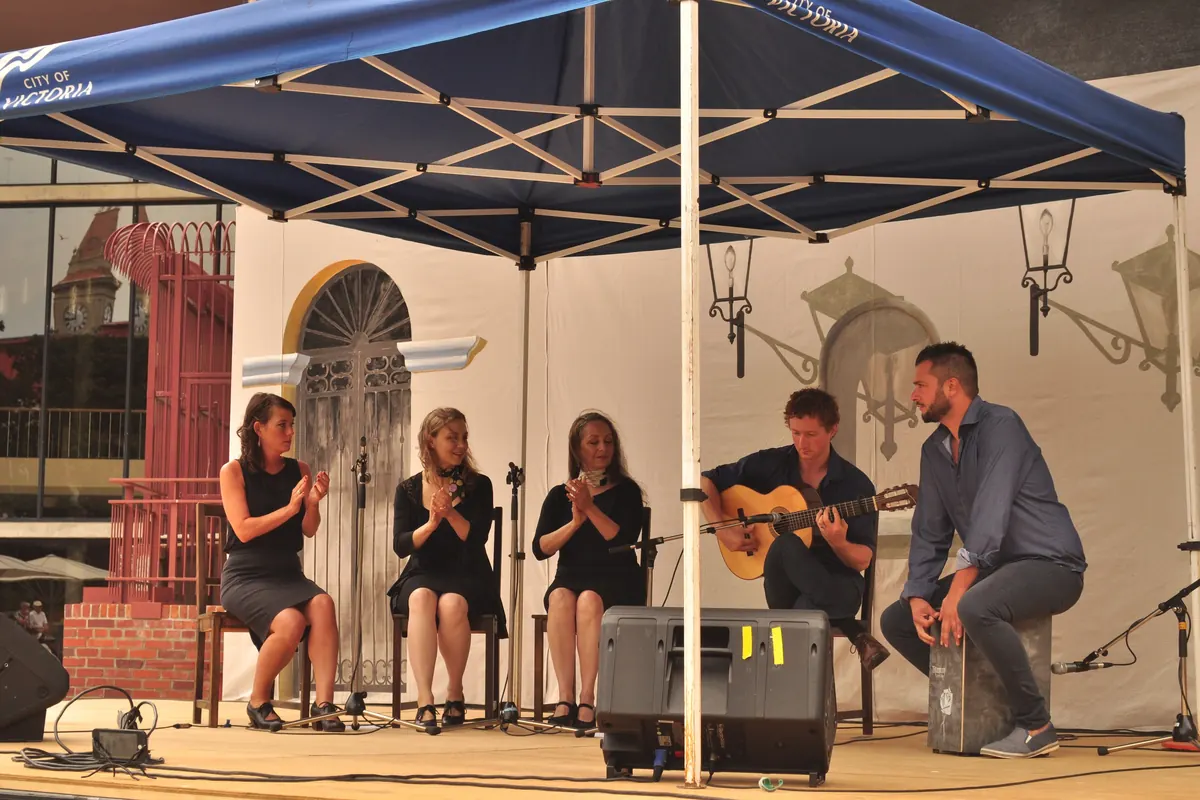
Wikipedia describes jaleo as clapping in rhythm plus spoken or shouted interjections that urge the performers on. Among the usual shouts are olé and así se baila. The clapping can be done with cupped hands for a hollow sound, called sordas, or with stiff fingers against the palm for a sharper one, called altas. Finger-snapping and foot-stomping belong to it too.
A skill of its own
Jaleo looks spontaneous, but Wikipedia says it is regarded as a science in itself that takes training. It quotes a saying that three good jaleadores can sound like ten, one carrying the rhythm, one the counter-rhythm and the third weaving through the other two. That is why the audience should leave the clapping to the performers and add only what the room invites, never a competing beat.
The three artists
A cantaor is a flamenco singer, a tocaor a guitarist and a bailaor a dancer. A flamenco guitar is built lighter and narrower than a classical one, with a lower action, so that its sound does not overshadow the singer, Wikipedia explains. Guitarists use rasgueado, which is strumming, and golpe, which is tapping the soundboard. The venue's blog stresses the complicity between singer, dancer and guitarist, so watch how they look at one another.
Footwork and the dancer
Wikipedia sums up flamenco dance by its emotional intensity, its upright bearing, its shaped arms and its stamped rhythms. Footwork is not decoration. It is a percussion line inside the music, answered by the guitar and the clapping. Some dancers work with castanets, canes, shawls or fans. Wikipedia adds that modern flamenco dance is highly technical and takes years of study, and that many dancers do not reach their peak until their thirties and keep performing into their fifties.
Duende
Writers on flamenco often reach for the word duende. Wikipedia quotes the Spanish dictionary, which calls it an indefinable charm, and Federico García Lorca's lecture on the subject, which borrows Goethe's phrase for an unexplained power that all feel. Wikipedia adds that it goes beyond technique and inspiration.
Listening to the guitar
A typical recital, says Wikipedia, strings together pieces in different palos, each made of verses with guitar interludes called falsetas between them. At the start of a piece the guitarist also establishes the key, the compás and the tempo. Listen for the opening bars, which tell the artists and the room what is coming, and for the falsetas between verses, where the guitar speaks alone. Techniques such as picado, tremolo and alzapúa give the guitar its range.
How to be a good audience
Arrive early, settle before the show starts and put your phone away. Listen to the opening bars without talking. Applaud when a piece ends, and if the room joins in with an olé, follow it. Keep your own clapping off the beat. Ask the staff on the night about photographs, since house rules are theirs to set. Above all, listen: a good flamenco night is mostly listening.
Frequently asked questions
Is clapping along welcome?
Only if the room invites it. Palmas are a skilled part of the performance, so leave the rhythm to the artists and applaud at the end of pieces.
What does olé mean?
It is a call of encouragement. Wikipedia says some writers trace it to a Hebrew verb meaning to throw upwards, though the origin is debated.
Sources