Before and after
El Born around the show
The old quarter around Teatro Flamenco Barcelona: Santa Maria del Mar, the iron roof of the Mercat del Born and Carrer de Montcada, before or after the show.
Reserve your hour ↗Quick answer
El Born is the lower part of La Ribera, a medieval merchant and maritime quarter in Barcelona's Ciutat Vella. Its focal point is the church of Santa Maria del Mar, built between 1329 and 1383. Carrer de Montcada, the former Mercat del Born and the Fossar de les Moreres are the other landmarks of the quarter, and the theatre stands among them on Carrer dels Abaixadors.
The quarter in a paragraph
Wikipedia says that La Ribera was a prosperous quarter from the 1200s to the 1400s, when the sea really did reach its streets, and that the lower part, below Carrer de la Princesa and leading towards Barceloneta, is called El Born after the 19th-century market. The area grew outside the Roman walls as a merchant and maritime hub. Today it is known for its narrow lanes, boutiques and bars. The theatre sits in this lower part.
Santa Maria del Mar
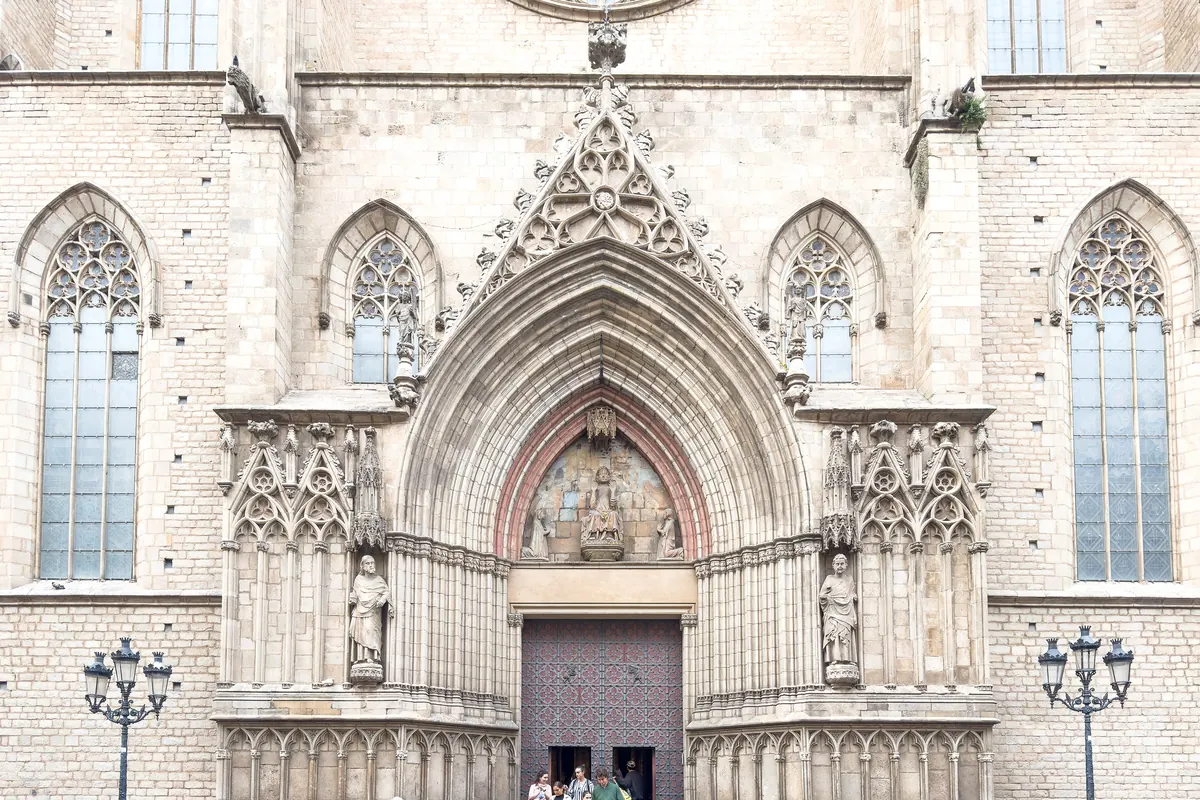
Santa Maria del Mar was built between 1329 and 1383, and Wikipedia calls it an outstanding example of Catalan Gothic, with a purity and unity of style that is very unusual in large medieval buildings. Its construction was backed by the common people and the guilds of the Ribera quarter. Wikipedia reports the widest column spacing of any Gothic church in Europe. Seen from outside it looks severe, and the interior is light and open.
Inside the nave
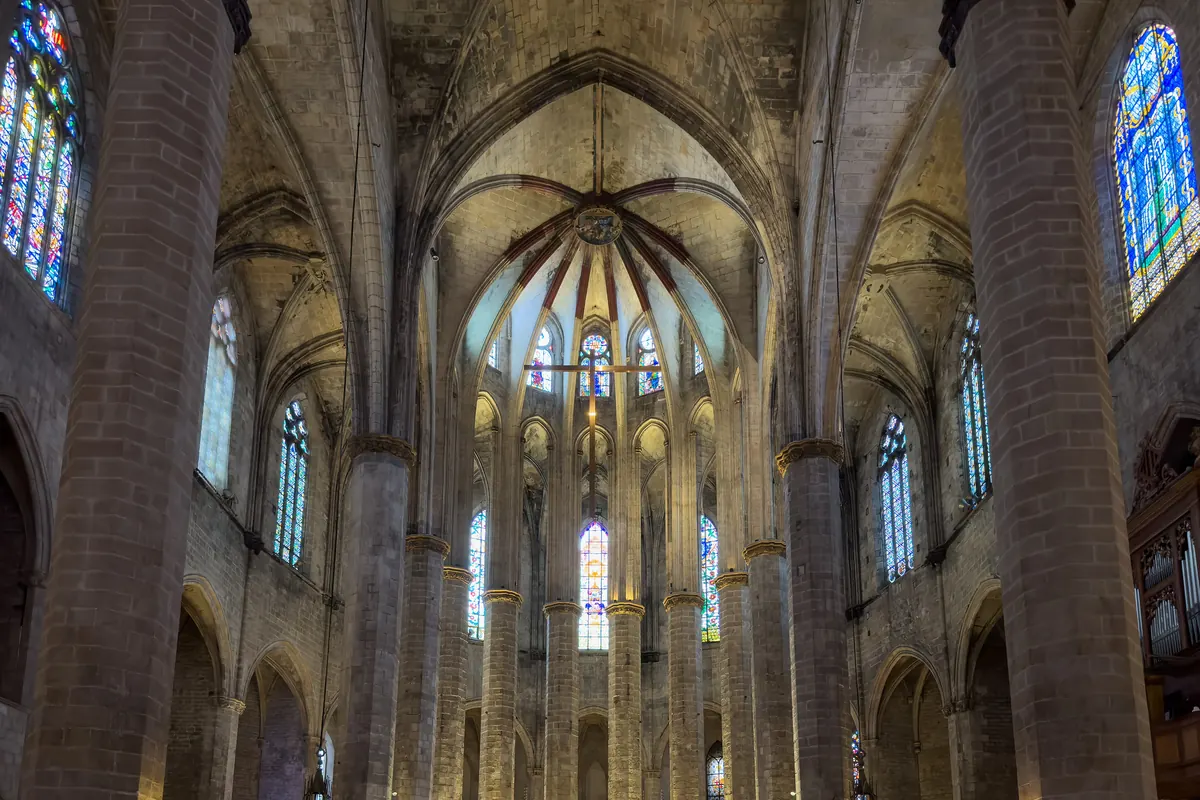
Wikipedia describes the interior as a basilica with three aisles forming a single space, with no transepts and no architectural boundary between nave and presbytery. The vault is simple and ribbed, carried on slender octagonal columns, and daylight enters through tall clerestory windows. If you want a sense of why the district is called the old city, this room gives it. Opening times and any entry rules are on the church's own pages, which change, so check them before you go.
Carrer de Montcada
Wikipedia lists the palaces along Carrer de Montcada among the notable buildings of La Ribera, among them the home of the Museu Picasso and the Museu Barbier-Mueller d'Art Precolombí. As with the church, hours and tickets for the museums are set by the museums, so look them up on their own sites instead of relying on a guide. The street is a pleasant way to arrive in the area.
The Mercat del Born
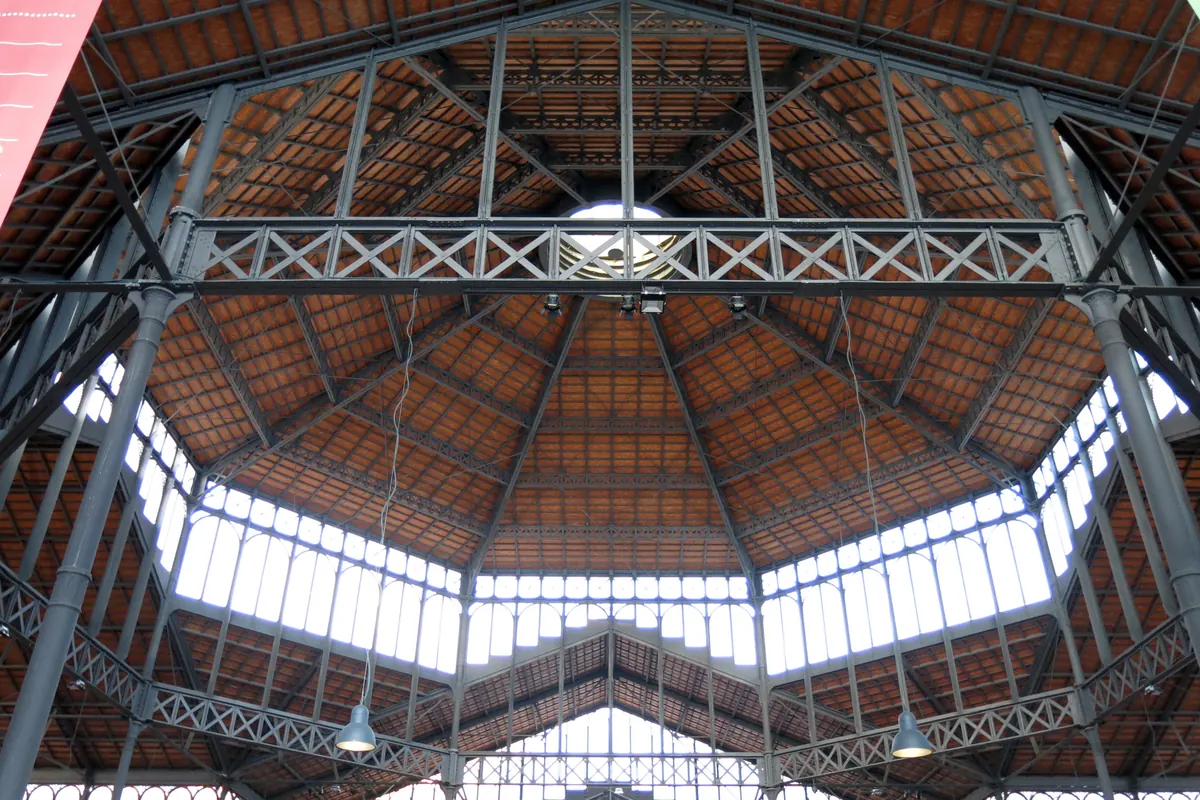
The Mercat del Born is a former market hall, and Wikipedia says it now covers archaeological ruins of the part of La Ribera that was demolished after the Siege of Barcelona of 1713 and 1714. The El Born Centre de Cultura i Memòria occupies it. The 19th-century iron structure is worth looking up at, as the photograph shows. The market gave the neighbourhood its name, which is why the theatre's address is described as El Born.
The Fossar de les Moreres
The Fossar de les Moreres is a square next to Santa Maria del Mar, and Wikipedia says Catalan soldiers killed in the siege of 1714 lie buried there. An eternal flame is kept burning there in their memory. It is a place of remembrance, so treat it quietly. Together with the church and the market, it shows that El Born is a quarter with a long and serious history, as well as bars and boutiques.
Before or after the show
A flamenco hour fits easily into an evening in this quarter. The venue's own blog suggests ending a day of sightseeing with the show after El Born, Port Vell or Barceloneta, and describes El Born as one of the neighbourhoods with the most cultural life. Its galleries, small shops, restaurants and historic buildings are all part of the quarter. Look for a meal on the day, since the show itself comes with no meal.
The sea road to Barceloneta
Wikipedia says Barceloneta is the seaside neighbourhood that borders El Born, with the Mediterranean on one side and Port Vell on the other, and that it was historically a working-class enclave of fishermen, sailors and dockworkers. In the mid-19th century it became Barcelona's premier destination for sea bathing. The area is a natural extension of an evening in the old quarter, and it gives the flamenco history in Somorrostro a physical setting. Take your own time and check opening hours for anything you want to enter.
Who this isn't for
No walking tour with timings and distances is offered here, and no restaurants are named. If you want opening hours for the church, the museums or the market, use their own sites. If you have only the evening free, skip the sightseeing and go straight to the theatre.
Frequently asked questions
Why is it called El Born?
Wikipedia says the lower part of La Ribera is called El Born after the 19th-century market. The market gave the quarter its name.
Is Santa Maria del Mar a Gothic church?
Yes. Wikipedia calls it an outstanding example of Catalan Gothic, built between 1329 and 1383.
Sources